Louisville's Changing Partisan Landscape
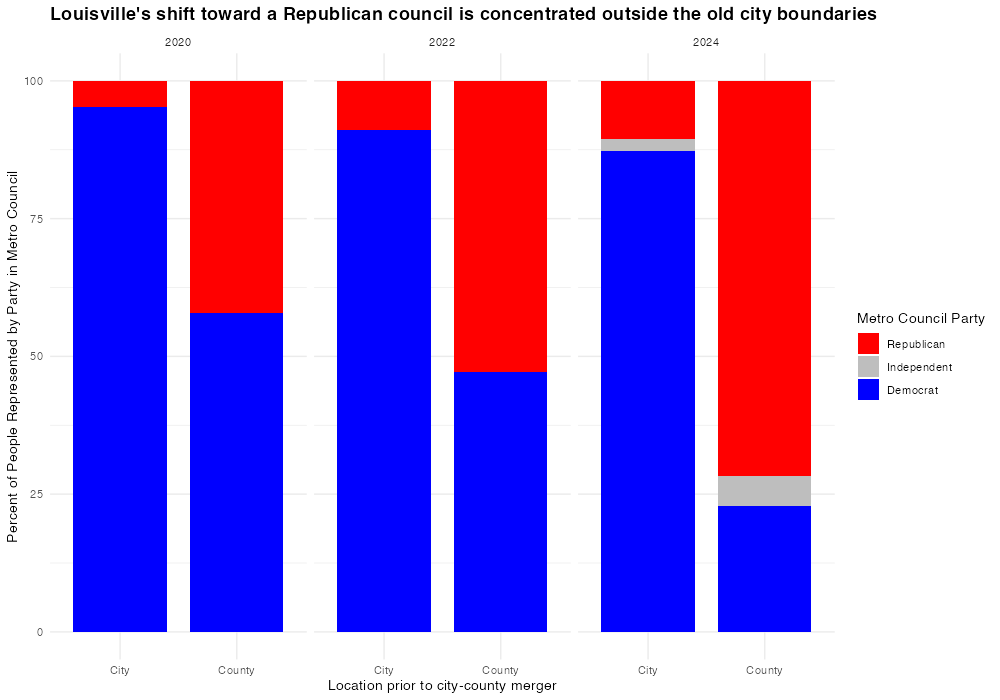
In 2020, 95 percent of residents in the former city boundaries were represented by Democrats, and 58 percent of residents in the county outside former city boundaries were also represented by Democrats.

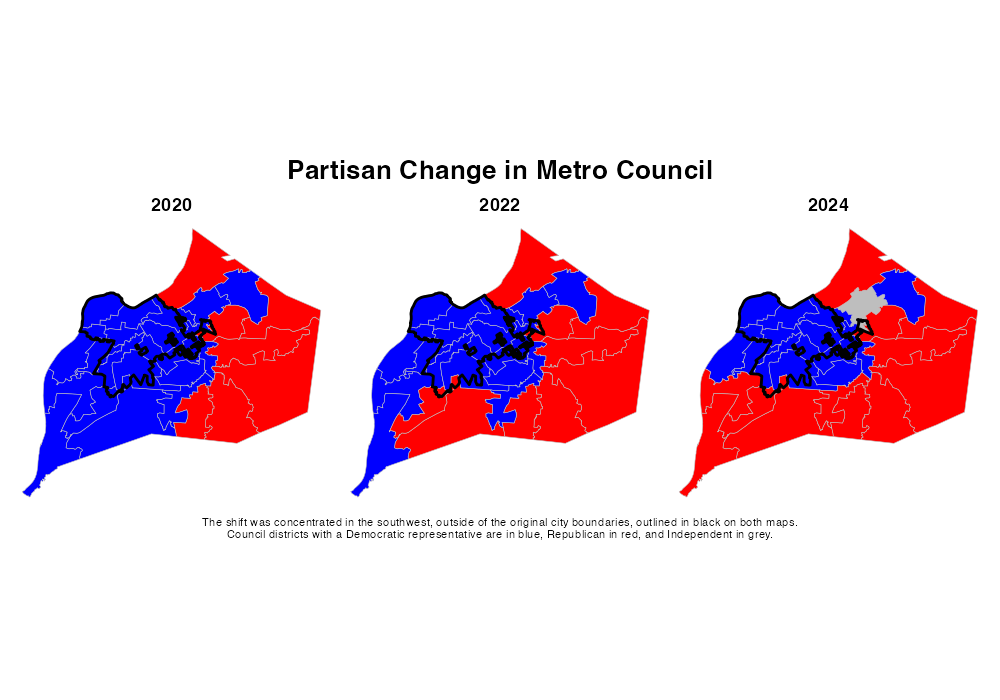
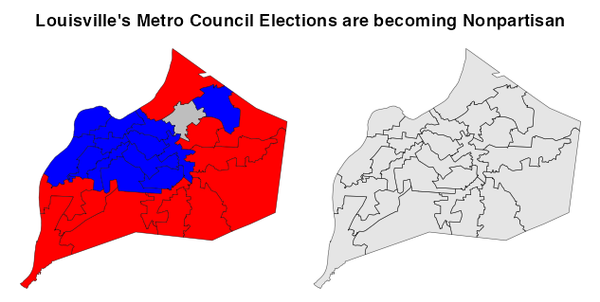
From the time of the initial merger between Louisville and Jefferson County in 2003, the metro council has had a democratic majority, but that balance underwent a substantial shift between 2020 and 2024, with Republicans picking up 5 seats in the southwestern part of the county across the last two metro elections.
In 2020, 95 percent of residents in the former city boundaries were represented by Democrats, and 58 percent of residents in the county outside former city boundaries were also represented by Democrats. In effect, a highly Democratic city was combined with a solidly Democratic county.
By 2024, the county area had flipped and had 71 percent of its resident represented by Republicans on metro council. This left Democrats with a narrow majority, 13-12 with 1 independent caucusing with the Democrats on the council, but it also set up a major geographical split between the politics of the city and the politics of the former county.
While local elections are decided by multiple factors, this shift matches two long-running national trends:
- Density determines partisanship
- The party of the incumbent president loses seats in local and midterm elections
1) Density
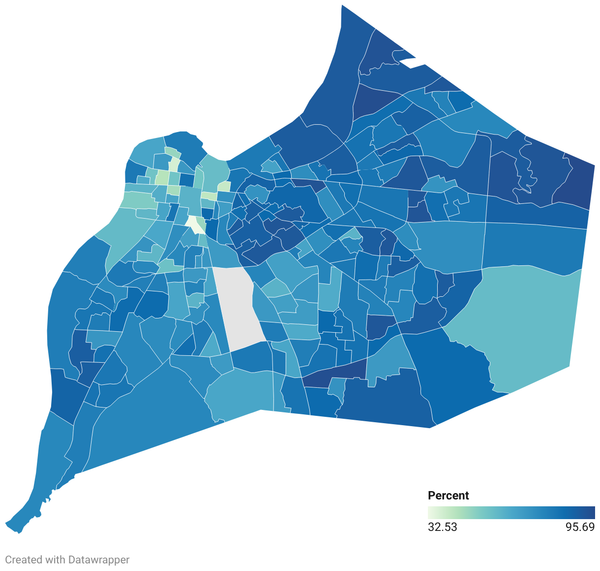
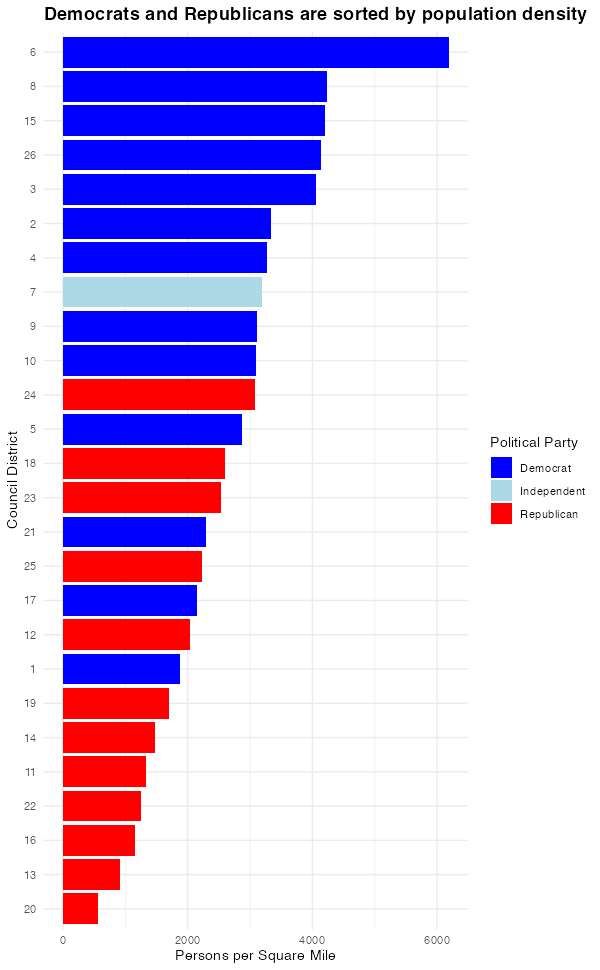
Density is a strong predictor of partisan lean, as the desire to live in urban settings correlates to voting preferences and people continue to sort themselves geographically over time. In Louisville, of the ten densest metro districts nine are represented by Democrats and the remaining one is an independent who was initially elected as a Democrat.
2) Incumbent Backlash
An observed regularity in electoral politics is the that President's party loses in the midterms and that public opinion tends to move against the party of the President. The degree to which this applies to local elections does not seem to be known (I did not find any research on this. I welcome any pointers if the research does exist.), but considering the increasing nationalization of politics it seems likely that the general Republican shift from 2020 to 2024 in Louisville matches the observed national Republican shift during that same time period.
With the president now a Republican with low approval ratings, one might expect a similar backlash in the opposite direction in the 2026 elections. This impact may be muted, however, as the change to nonpartisan elections in Louisville mean that the party of each candidate will not appear on the ballot.
Methodology Notes
This analysis uses census tract population data and maps each tract to the districts it overlaps with. Tracts are assumed to have uniform population distribution within each tract. While this is imperfect, in the absence of direct vote counts and matching geographical boundaries it is the best available data. Code for the analysis is available here.